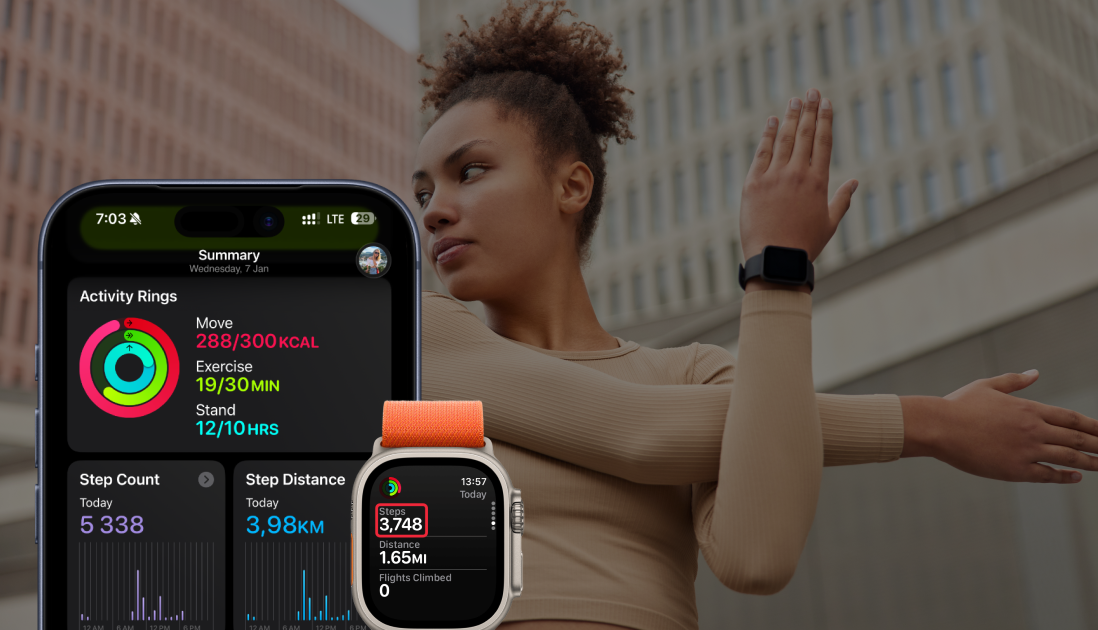
Apple Watch or Whoop? Did you drink enough water today? What does your recovery score look like this morning? For many people, fitness today isn’t about intense training plans or professional sports. It’s about everyday habits: staying active, getting enough sleep, moving a bit more, and understanding how the body feels from one day to the next.
Wearable devices have quietly become small everyday helpers. They don’t just track workouts, they make health signals easier to notice and understand. Activity levels, sleep quality, and recovery scores help people decide when to push, when to take it easy, and when rest is the better option, especially after poor sleep or a long evening out.
Beyond wearables, there are dozens of fitness apps built around very specific needs - from habit formation and guided workouts to recovery, mental focus, and niche sports. As a result, fitness app development today is less about building another workout tracker and more about creating products that fit naturally into daily routines.
If you’re planning to develop a fitness application, this article explores the main types of fitness apps, the features that shape engagement, how these products are built, what influences development cost, and how fitness apps are maintained and scaled over time.
Fitness App Development: Market Reality and Opportunity
The fitness app market keeps growing, but not in the simple, predictable way it did a few years ago. According to data from Business of Apps and Statista, digital fitness and well-being remain one of the most active segments within the broader digital health market. Health and fitness apps consistently rank among the most downloaded categories worldwide, with millions of users adopting fitness and wellness tools as part of their everyday routines.
Market growth doesn’t equal success. As adoption rises, so does competition. Users can switch products in seconds. For teams, earning long-term engagement is the real challenge. Fitness apps often launch strong, then lose traction as motivation fades.
This gap between demand and retention shapes today’s market. Users want apps that fit into their routines, work smoothly with their devices, and offer feedback that actually helps them day to day. For development teams, building a fitness app means addressing engagement, saturation, data accuracy, personalization, and performance early on.
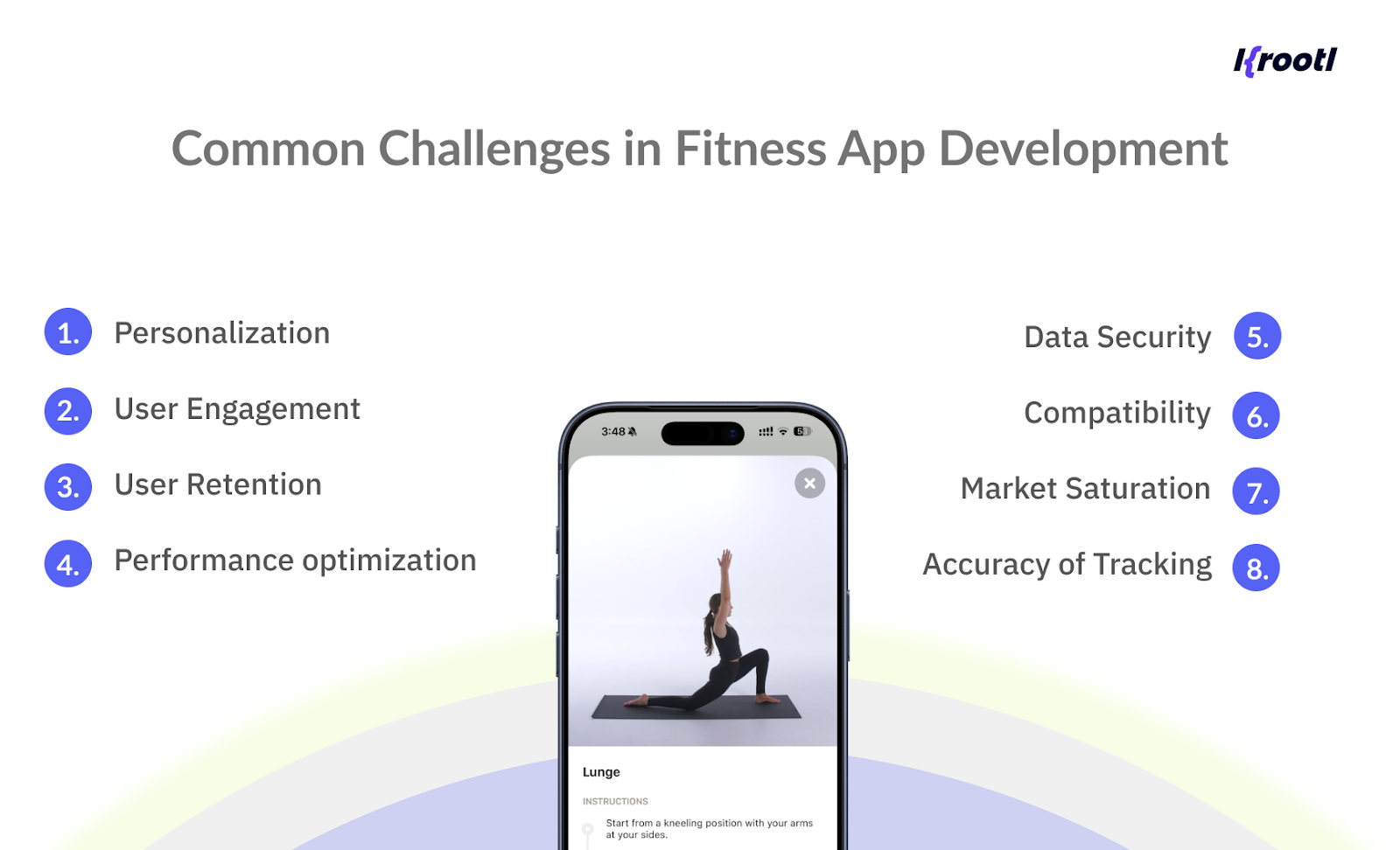
Another important shift is how closely fitness apps are now tied to the wider health ecosystem. Wearables, health platforms, and sensors generate more data than ever before, raising expectations around accuracy, personalization, and trust. As a result, fitness app development increasingly sits at the intersection of wellness, behavior change, and health data - not just workout tracking.
For founders and product teams, this creates both pressure and opportunity. The market is crowded, but it’s far from saturated. There is still room for well-designed fitness products, especially those that focus on a clear problem, respect how people actually use these apps, and fit naturally into everyday life.
Types of Fitness Apps and Their Core Capabilities
Before looking at engagement mechanics or development details, it helps to understand how fitness apps are commonly structured as products. While many apps overlap in functionality, most successful fitness apps are built around one primary purpose - and that purpose shapes the capabilities they focus on.
Below are the most common types of fitness apps on the market today, along with the core capabilities they typically offer.

Workout and Training Apps
These apps focus on helping users follow structured workouts, whether at home, in the gym, or outdoors. Their main value lies in removing uncertainty around training - users don’t need to plan sessions themselves or decide what to do next.
Core capabilities usually include guided workouts, exercise demonstrations, training plans, and basic progress tracking. Habit-forming elements often exist in the background, supporting consistency through reminders or streaks rather than being the main focus.
Well-known examples include Nike Training Club, Freeletics, and Centr.
Activity and Habit Tracking Apps
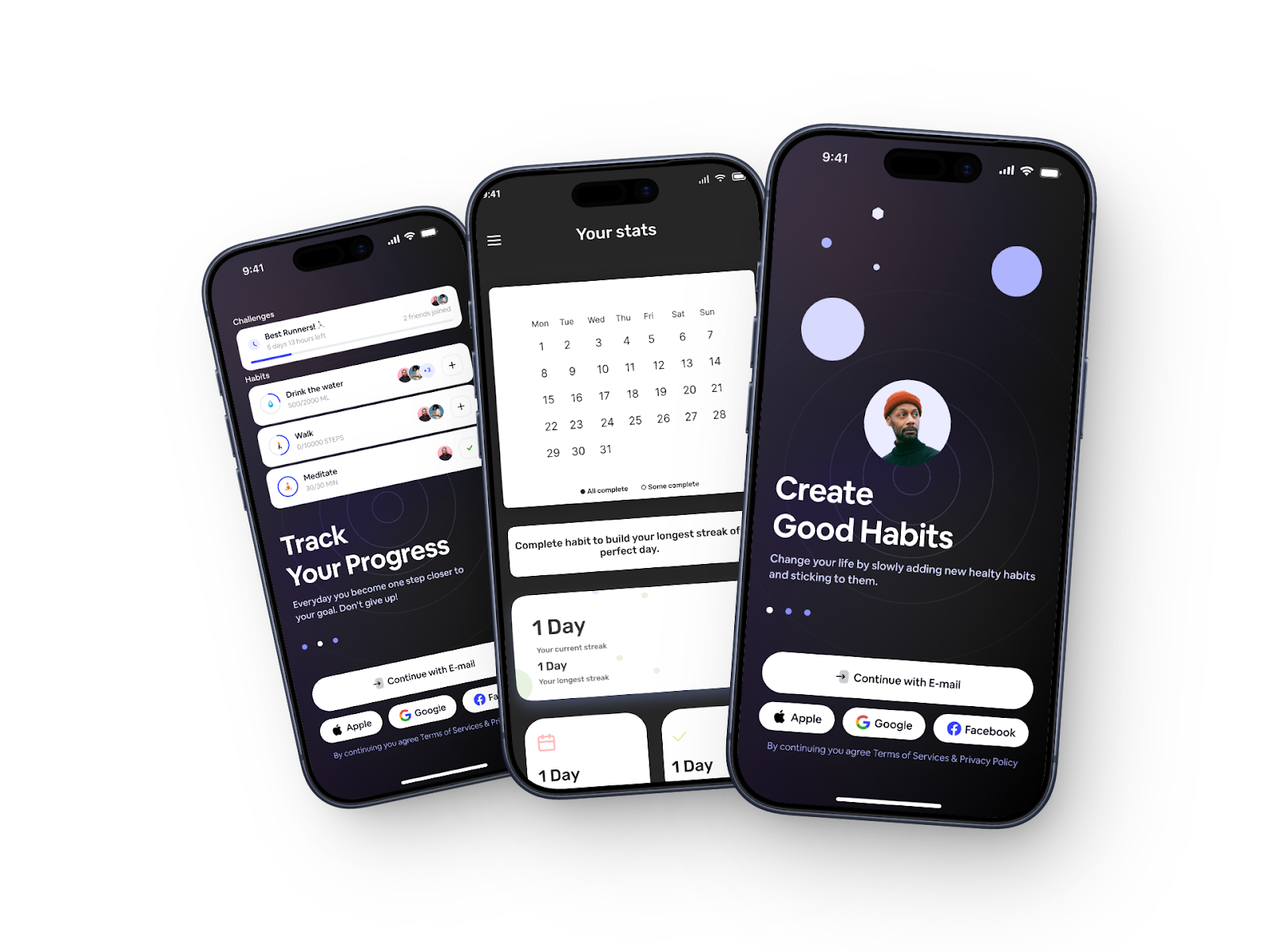
Rather than centering on workouts, these apps focus on everyday movement and consistency. They work well for users who want gentle accountability and visibility into daily activity, without the pressure of structured programs.
Typical capabilities include step counting, activity summaries, daily goals, streaks, and reminders. In this category, habit tracking is the core value - helping users show up regularly, even on low-motivation days.
Popular examples include Apple Fitness / Activity, Google Fit, and Strava.
Apps like Bevel also fall into this group, focusing on habit formation and daily movement rather than performance or intensive training plans.
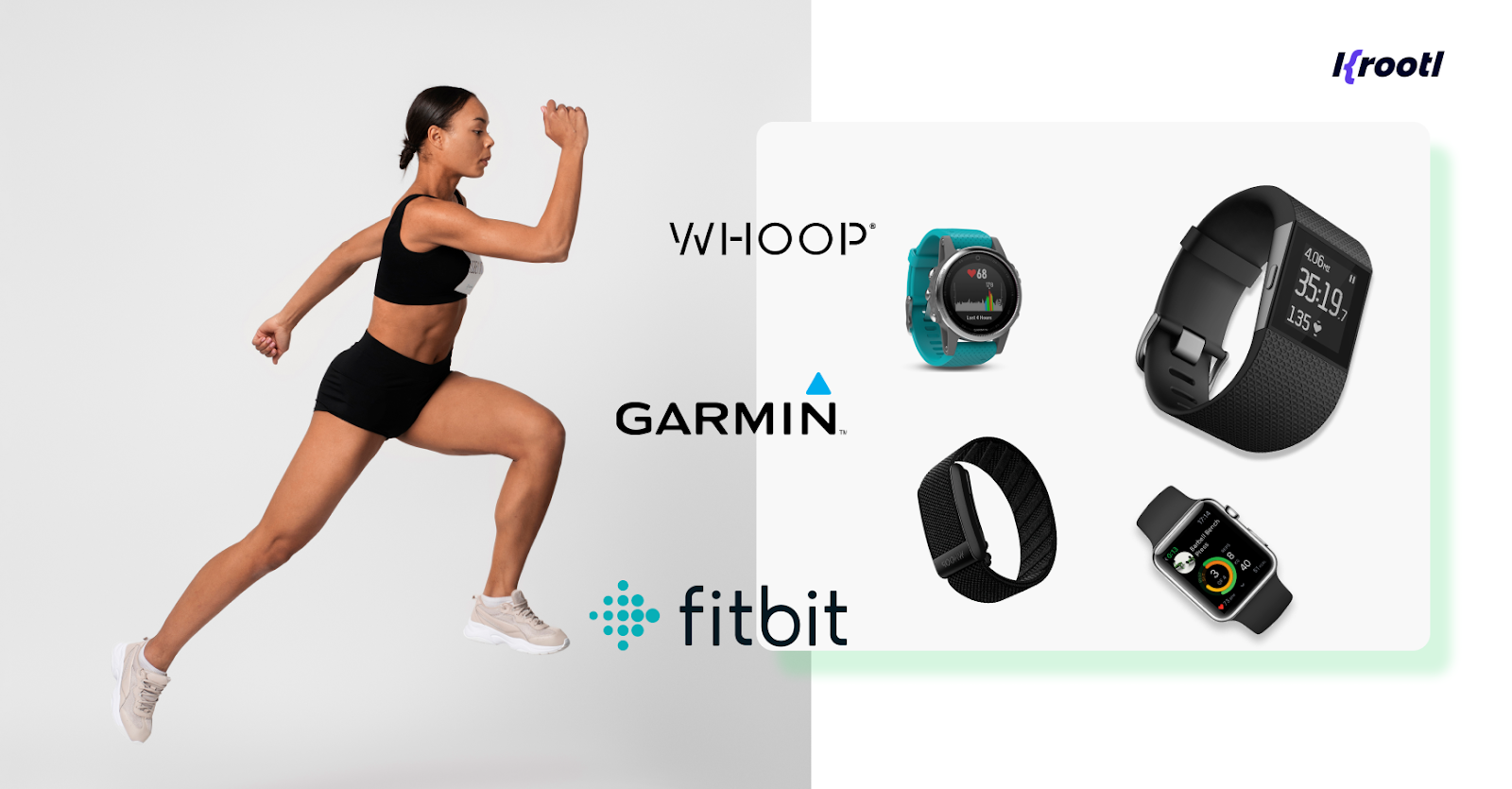
Health-Focused Fitness Apps
These apps sit closer to the broader digital health space. Their goal is to connect physical activity with overall well-being by helping users understand long-term patterns rather than individual sessions.
They often combine activity data with nutrition, sleep, recovery, or stress indicators, offering a more holistic view of health. Habit tracking here extends beyond workouts to daily routines that support long-term well-being.
Examples include MyFitnessPal, Fitbit, and Samsung Health.
Wellness and Meditation Apps
These apps sit closer to the broader digital health space. Their goal is to support overall well-being by combining physical activity with mental health, recovery, and long-term lifestyle habits.
Alongside activity tracking, they often focus on sleep quality, stress management, mindfulness, and recovery. Meditation apps, in particular, help users build mental resilience and consistency through short, repeatable sessions that fit naturally into daily routines - often complementing physical fitness rather than replacing it.
Typical capabilities include guided meditation sessions, breathing exercises, sleep support, wellness tracking, and long-term progress insights. Some products also go a step further by allowing users to create or customize meditation experiences based on personal goals, pace, or context.
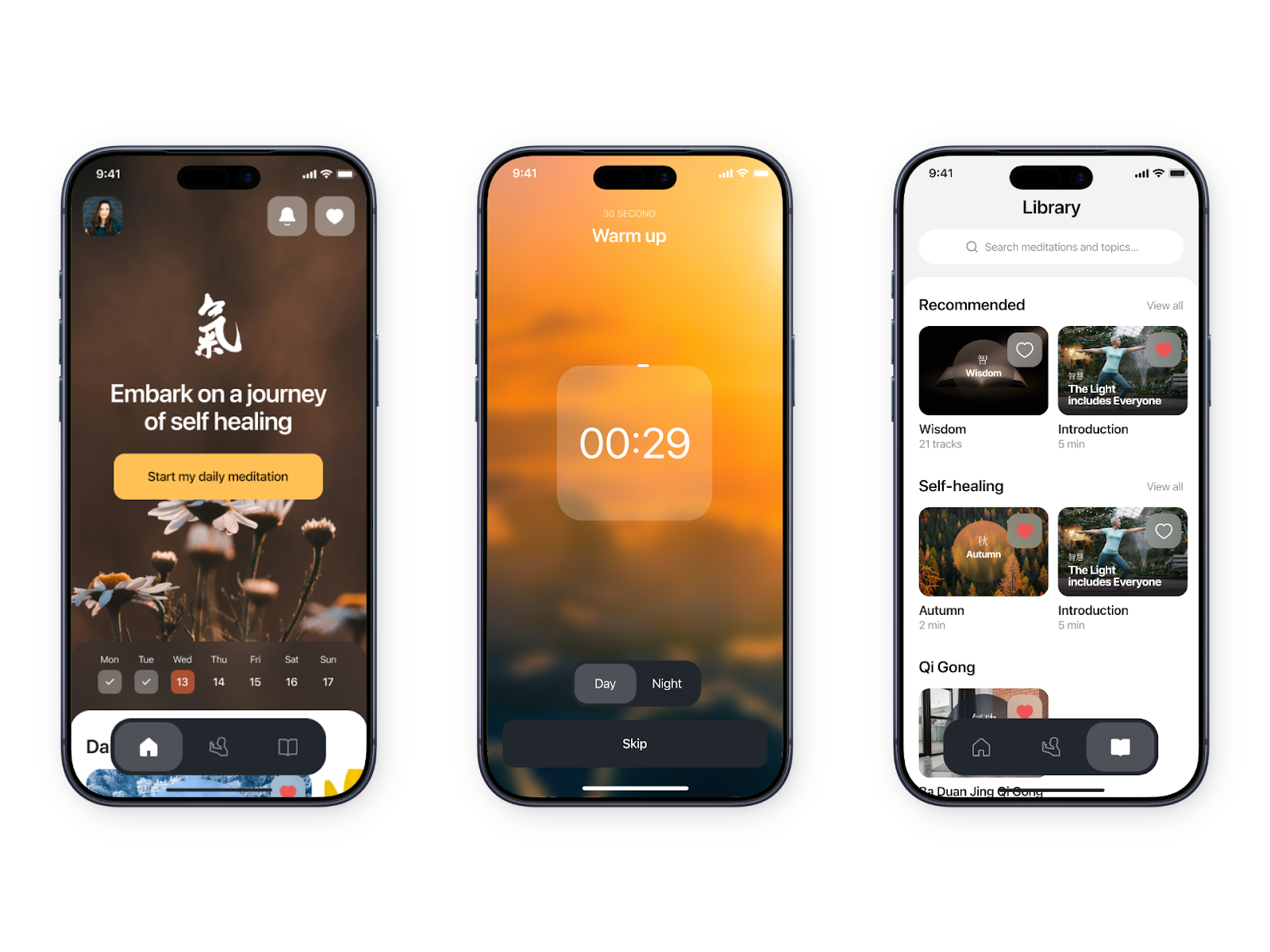
We’ve explored this approach in practice while working on a custom meditation app, where personalization played a central role in helping users stay consistent over time - you can read more in our meditation app case study.
Well-known examples in this space include Headspace, Calm, and Insight Time.
Coaching and Trainer-Led Platforms
Some fitness apps are built around direct guidance from coaches or trainers. These platforms typically target users who want personalized support but don’t necessarily need in-person sessions.
Common capabilities include tailored training plans, feedback from coaches, progress reviews, and ongoing communication. Habit-building plays a supporting role, helping users stick to plans between check-ins.
Examples include Future, Trainerize, and coach-led content platforms like Peloton.
Community-Driven and Gamified Fitness Apps
Community-driven fitness apps focus on motivation through shared progress rather than individual performance alone. Instead of pushing users to compete or optimize every metric, these products emphasize accountability, consistency, and social connection. The core idea is simple: people are more likely to stick with healthy routines when they feel supported by others working toward similar goals.
Many apps in this category use lightweight gamification and a custom scoring system to make progress visible at a group level. Rather than ranking users or creating pressure, these mechanics reward consistency and participation, helping transform small daily actions into meaningful collective momentum. This approach works especially well for habit formation, wellness routines, and long-term lifestyle changes.
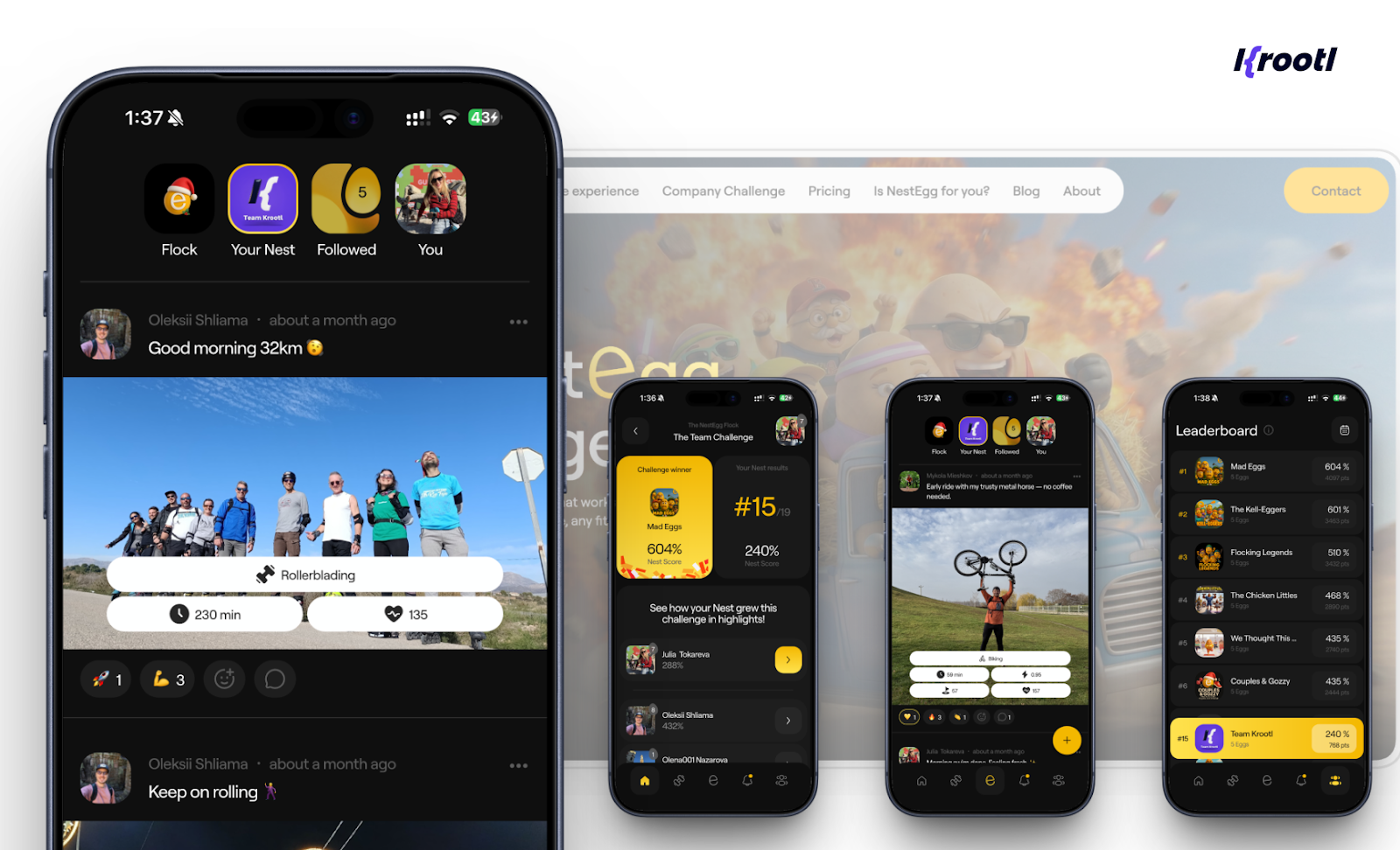
We applied this model when developing Nest Egg Health, where group-based progress tracking and collective goals played a central role in the experience. Instead of focusing on individual performance metrics, the app encouraged users to stay consistent by seeing how their actions contributed to shared outcomes. In practice, this proved highly engaging - users were more likely to maintain routines when progress felt social and visible, turning personal habits into a shared commitment.
Community-driven fitness apps are particularly effective for audiences who value motivation, belonging, and long-term consistency over competition. When designed thoughtfully, they show how fitness app gamification and scoring systems can support healthier behavior without adding pressure, reinforcing engagement through connection rather than comparison.
Who Uses Fitness Apps Today
A much broader audience uses fitness apps than many teams initially expect. While early fitness products often focused on athletes or highly motivated users, today’s fitness apps serve people with very different goals, routines, and levels of commitment. Understanding who the app is for - and why they use it - is a critical step in fitness app development.
These user groups differ mainly in motivation and expectations, as illustrated below.
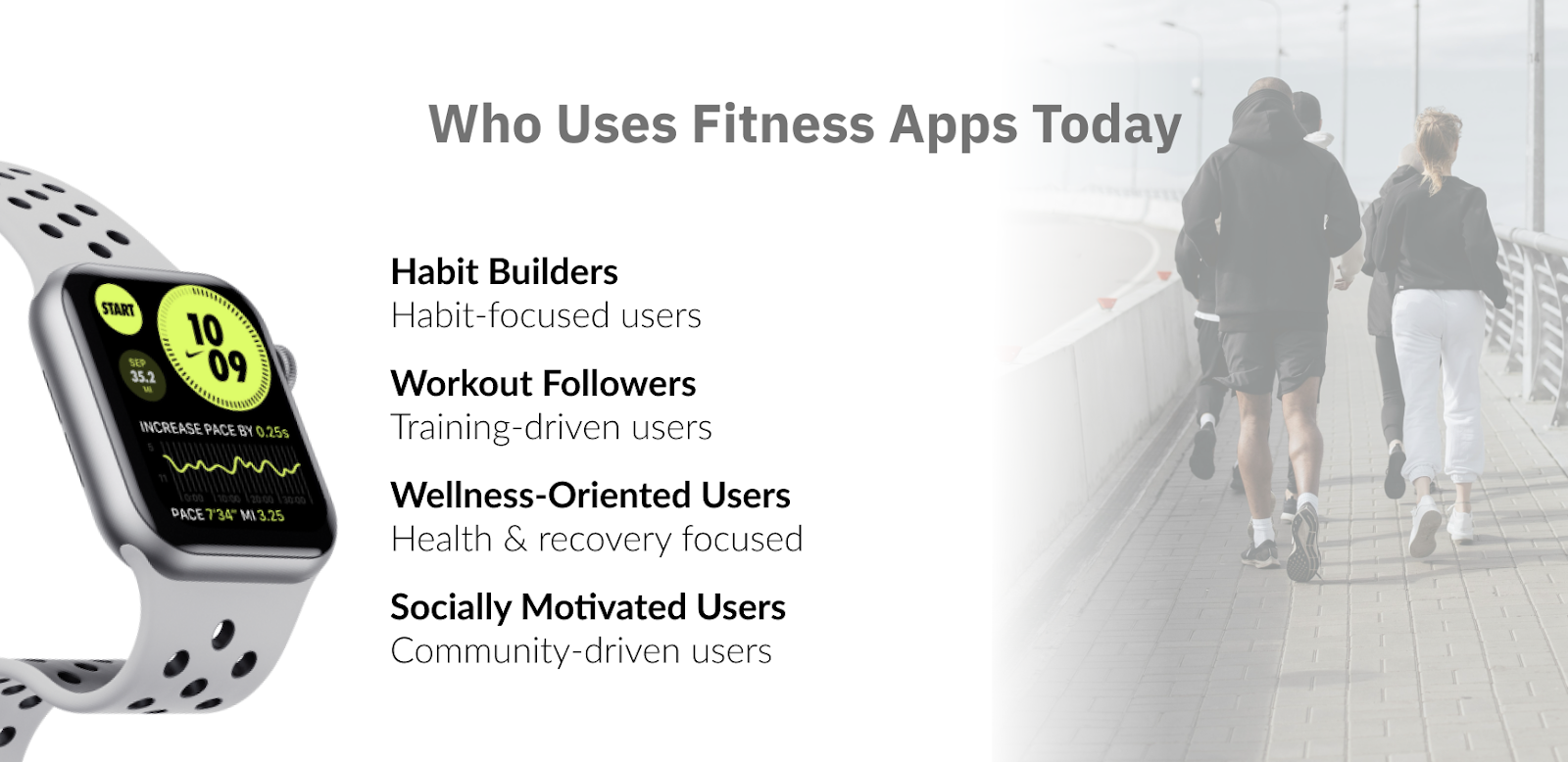
One common group includes users focused on building everyday habits. These users aren’t necessarily training for performance or following strict programs. Instead, they want gentle structure - reminders to move, track activity, or stay consistent over time. For them, simplicity and low friction matter more than advanced metrics or detailed analytics.
Another group consists of users who follow structured workouts or training plans. They may work out regularly at home or in the gym and value clarity above all else. Knowing what to do next, how to track progress, and whether they’re improving helps reduce decision fatigue and keeps them engaged.
Some users approach fitness from a health and wellness perspective. Their focus goes beyond workouts to include sleep, recovery, stress, and overall well-being. These users often rely on data from wearables and health platforms to understand long-term patterns rather than individual sessions.
Finally, some users are motivated primarily by social interaction and accountability. Challenges, shared goals, and community features help them stay consistent, especially when motivation drops. For this audience, social context can matter more than personalization or advanced tracking.
In reality, most fitness apps serve a mix of these user types. The challenge is deciding which group the product is built for first. Trying to address every audience from day one often leads to complexity without clarity. Teams that clearly define their primary users are better positioned to make consistent decisions as they develop a fitness application and move into later stages of product growth.
Choosing a Monetization Model for Your Fitness Application
Once you have a sense of who your users are and the type of product you want to build, the next critical decision is how your fitness app will generate revenue. Monetization is more than just picking a pricing strategy - it’s about aligning your business model with user behavior, expectations, and long-term engagement patterns.
Fitness app development challenges many teams to think about revenue early, but not prematurely. The goal isn’t to add paywalls everywhere; it’s to design a model that reflects the value users get and the way they interact with your product.
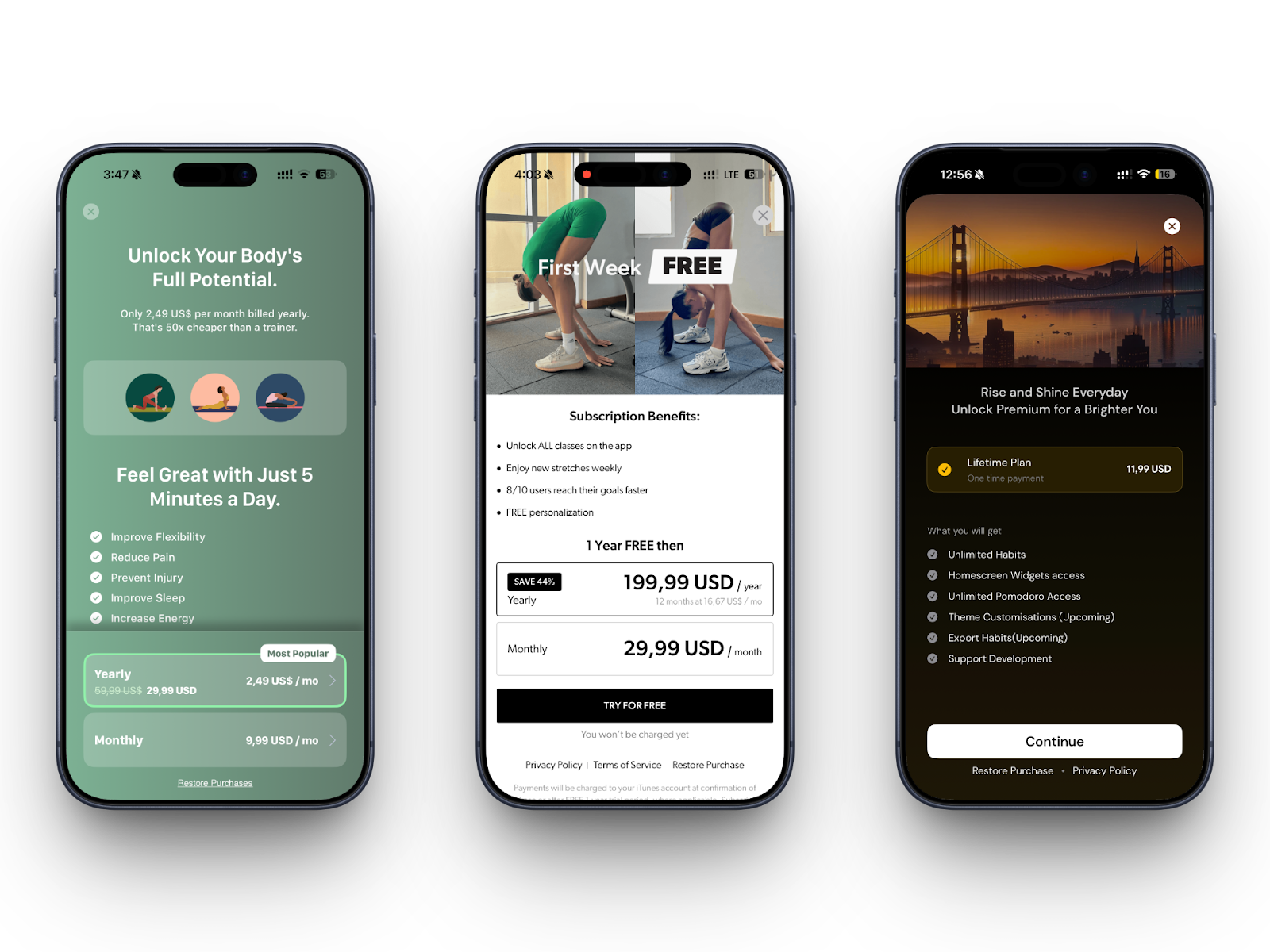
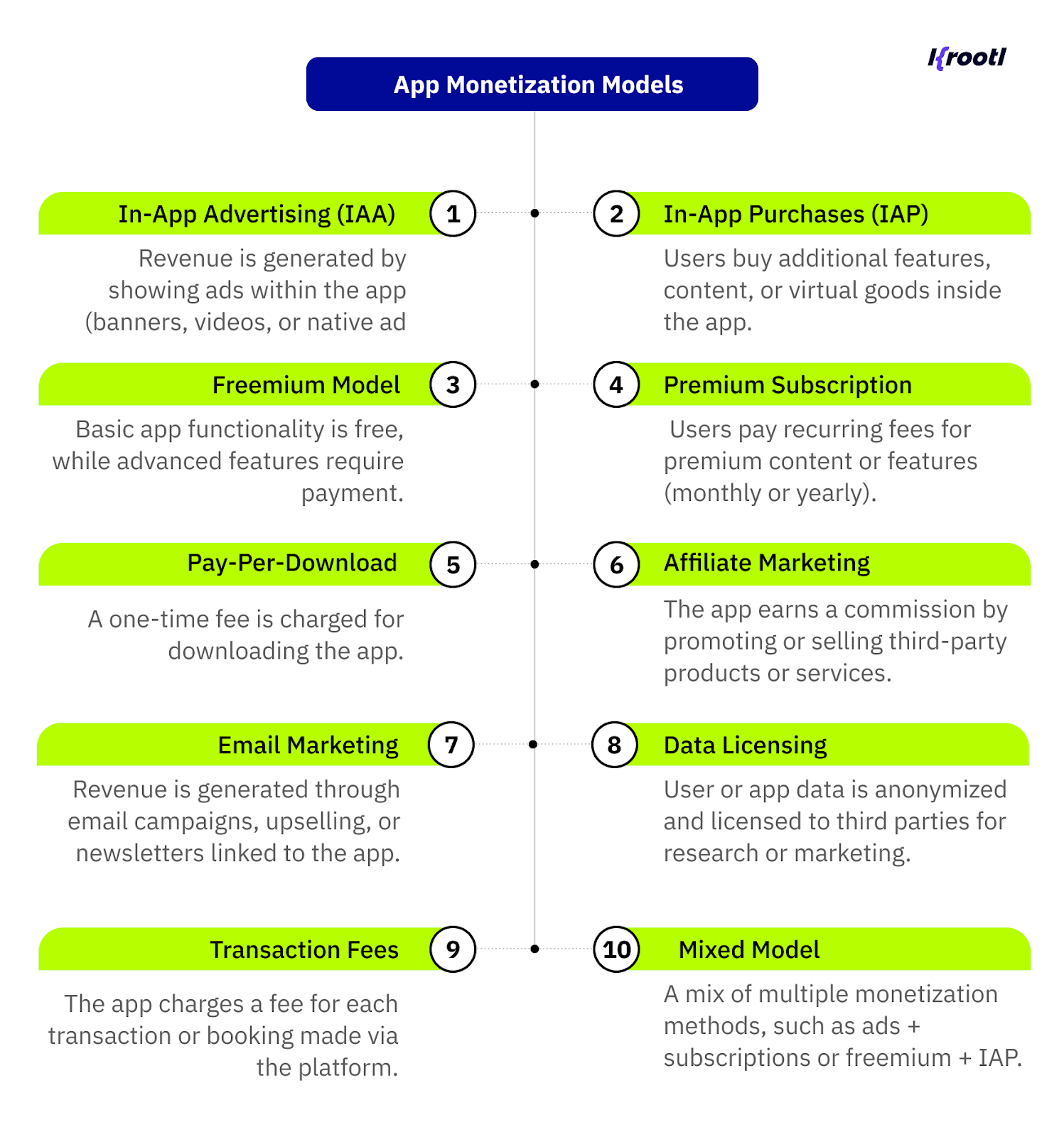
Some of the most common monetization approaches in fitness apps include:
- Subscription models - users pay a recurring fee for full access to content or features. This model works when the app delivers ongoing value over time, such as regularly updated workout plans, personalized training, or wellness insights that evolve with user behavior.
- Freemium + upgrades - a free tier gives access to core functionality, and paid tiers unlock premium features. This can work well when you want to attract a broad user base but convert a portion of engaged users into paying customers.
- One-time purchases - users pay once for lifetime access. This is less common in fitness apps today but can make sense for niche or standalone products with a defined scope.
- Service-oriented monetization - integrating with live coaching, personal trainers, or enterprise wellness programs, where revenue is tied to human services rather than just in-app features.
Your choice of monetization model should be informed by how your users engage with your app and what they value most. For example, users who check in daily for short habit tracking may respond well to a modest subscription, while users seeking deep personalization or coach interactions may be prepared to pay more for premium support.
It’s also worth thinking about how monetization ties into long-term retention. Aggressive paywalls too early can push users away, while a well-paced upgrade path can support sustainable growth without compromising the user experience.
For a deeper dive into how to evaluate and choose the right business model for your product - including practical examples and decision criteria - see our guide on choosing a business model for an app.
Features That Drive Engagement And Which Ones You Can Skip
Once the monetization model is clear, feature decisions become much easier. Instead of asking “What features do fitness apps usually have?”, the more useful question is “What features actually keep users coming back - and support the business model we’ve chosen?”
In fitness app development, engagement rarely comes from feature volume. It comes from a small set of well-designed interactions that fit naturally into a user’s routine.
Features That Consistently Drive Engagement
One of the strongest engagement drivers across almost all fitness app types is progress visibility. Users want to see that their effort matters, whether that’s through activity summaries, streaks, trend charts, or simple weekly feedback. Clear progress helps users stay motivated even when results are gradual.
Another important layer is habit reinforcement. Gentle reminders, daily goals, and low-effort check-ins help reduce friction and support consistency. These features work especially well for habit-focused and wellness-oriented apps, where long-term behavior change matters more than short-term performance.
Personalization also plays a key role, but it doesn’t always need to be complex. Even small adjustments - such as adapting goals based on recent activity or suggesting lighter sessions after poor sleep - can make an app feel more relevant and supportive.
For apps that include social or community elements, shared challenges and accountability often boost engagement. Seeing progress in context, whether through leaderboards or group goals, can help users stay involved when individual motivation dips.
Features That Often Can Wait
At the same time, many fitness apps fail by trying to do too much too early. Advanced analytics, complex dashboards, or highly granular metrics may look impressive, but they don’t always add value for early users - and can increase development time and maintenance cost significantly.
The same applies to heavy gamification or broad social networks. While these features can be powerful, they only work when there’s already an active user base. Adding them too early often results in empty screens and unnecessary complexity.
Integrations are another common area where teams overinvest upfront. While wearable and health platform integrations are important for many products, not every app needs full support for every device from day one. Prioritizing the integrations that match your primary users is usually a better approach.
Aligning Features With Product Goals
The most effective fitness apps are built iteratively. They start with a focused feature set that supports one core behavior - showing up, tracking progress, or following guidance - and expand only when there’s a clear reason to do so.
When teams develop a fitness application with engagement in mind, feature prioritization becomes less about trends and more about impact. Each feature should have a clear role: supporting habits, reinforcing value, or enabling monetization without disrupting the user experience.
In the next section, we’ll look at wearable integration and health data handling, and how these layers influence both technical complexity and product decisions - especially for teams planning to develop an app with wearable device support.
Wearable Integration and Health Data Handling
Today’s fitness apps increasingly work alongside wearables like smartwatches, fitness bands, rings such as Oura Ring, and chest straps - each contributing different signals around sleep, activity, recovery, and readiness.
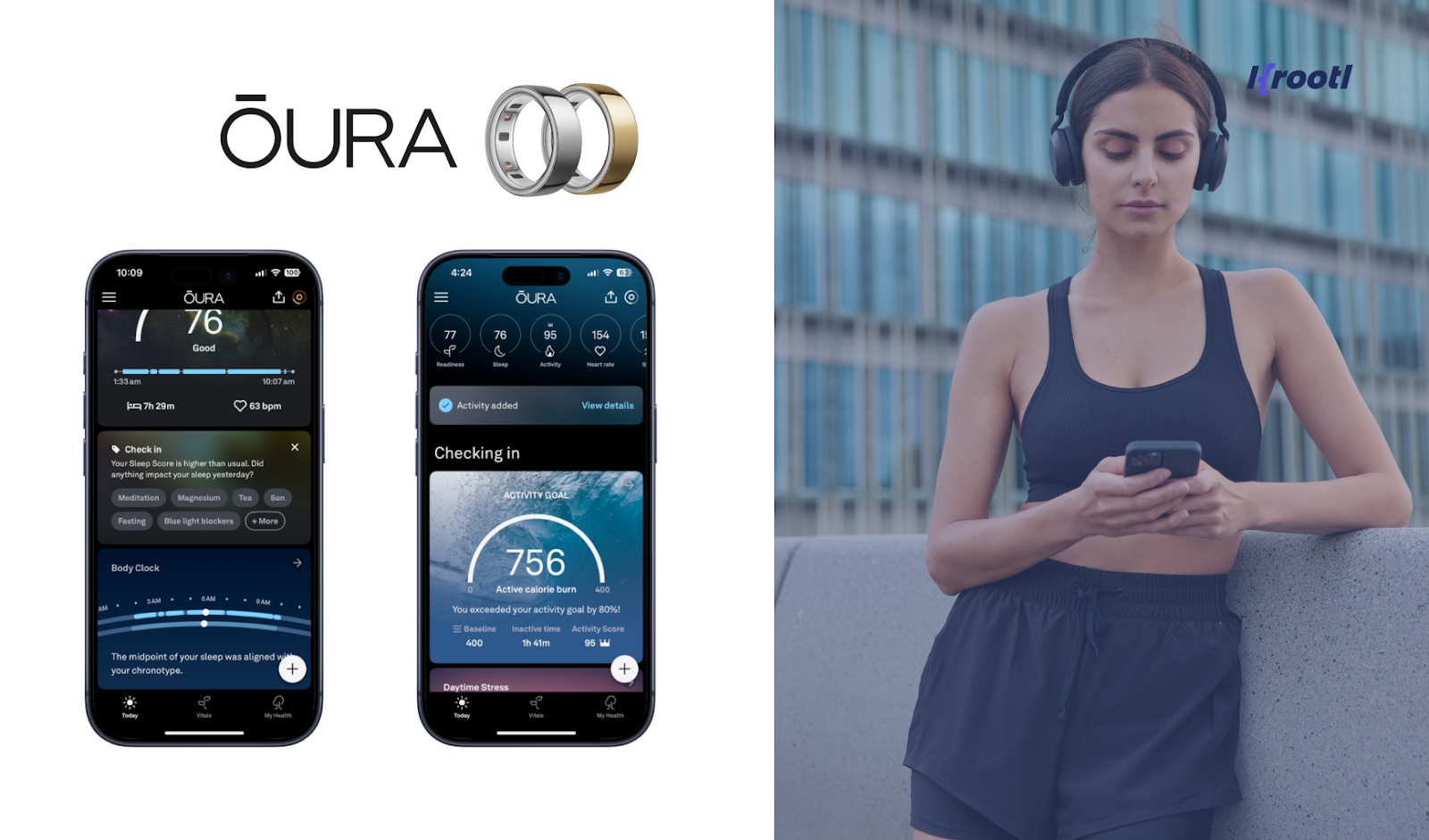
When teams decide to develop an app with wearable device support, the real challenge isn’t collecting data - it’s making that data useful, reliable, and easy to understand.
At a high level, wearable apps follow a simple but carefully orchestrated flow.
How Wearable Fitness Apps Work
First, data is collected on the wearable itself. This includes metrics such as steps, heart rate, sleep phases, movement intensity, or recovery indicators. Each device collects this data continuously in the background while prioritizing battery life and performance.
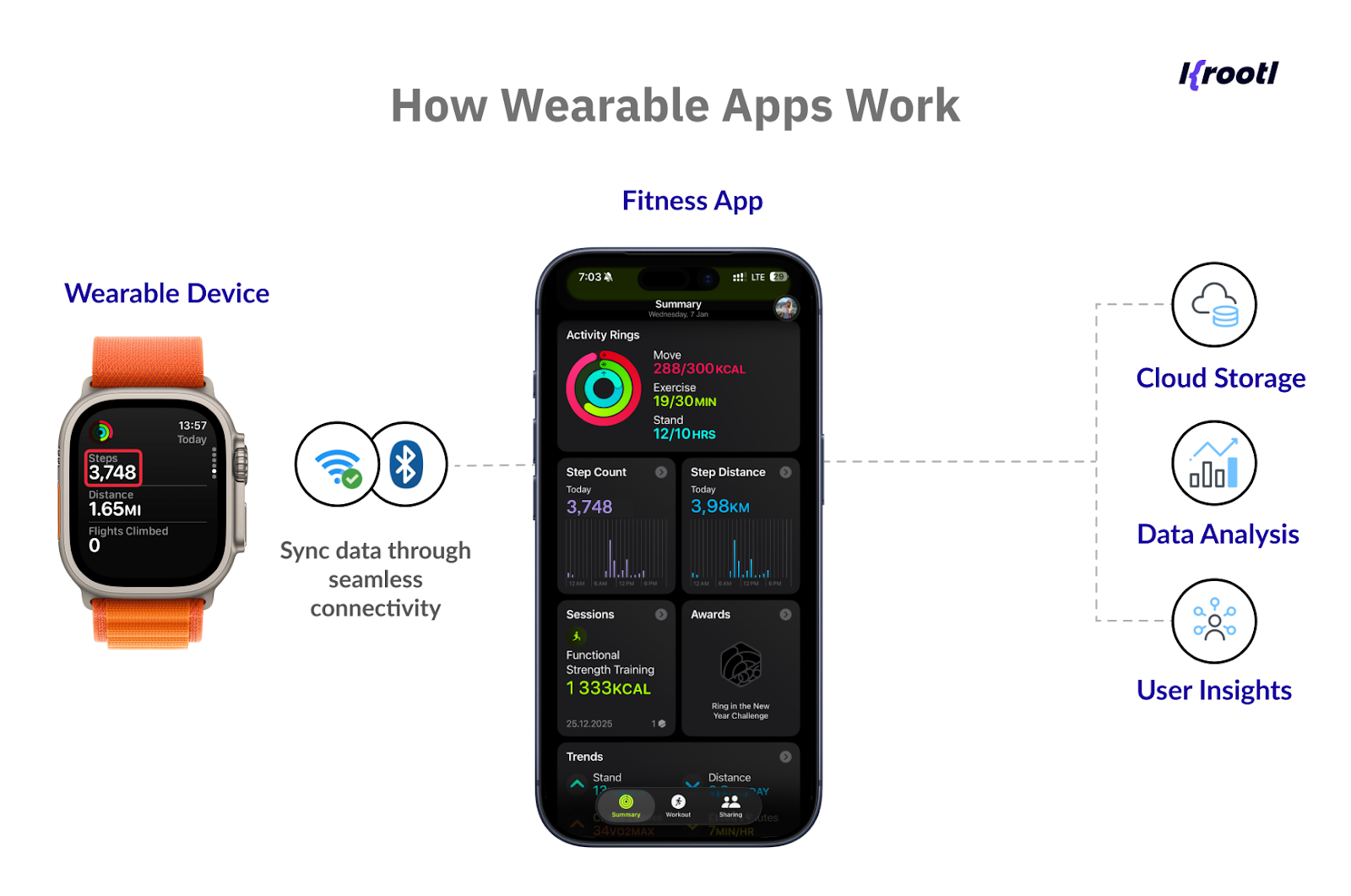
Next, the wearable syncs data with a mobile app, usually via Bluetooth or Wi-Fi.
This connection allows near real-time updates while keeping the wearable lightweight. The mobile app becomes the central point where raw sensor data is cleaned, structured, and prepared for analysis.
From there, data is often sent securely to the cloud, where long-term storage, analytics, and personalization logic live. This layer makes it possible to calculate trends, compare historical activity, and generate insights such as recovery scores or progress summaries across weeks and months.
Finally, the app translates data into insights users can act on.
Instead of showing raw numbers, successful fitness apps focus on clarity - highlighting patterns, changes, and recommendations that help users decide whether to train harder, take it easy, or rest.
Wearables, Trust, and Data Accuracy
One important nuance in fitness app development is that wearable data is never perfect. Sleep tracking varies between devices, recovery metrics are calculated differently, and gaps in data are common. Strong products treat this information as directional guidance, not absolute truth.
Privacy and transparency also play a major role. Users are far more willing to share sensitive health data when apps clearly explain what is collected, how it’s used, and why it matters. Trust becomes a core product feature, not just a legal requirement.
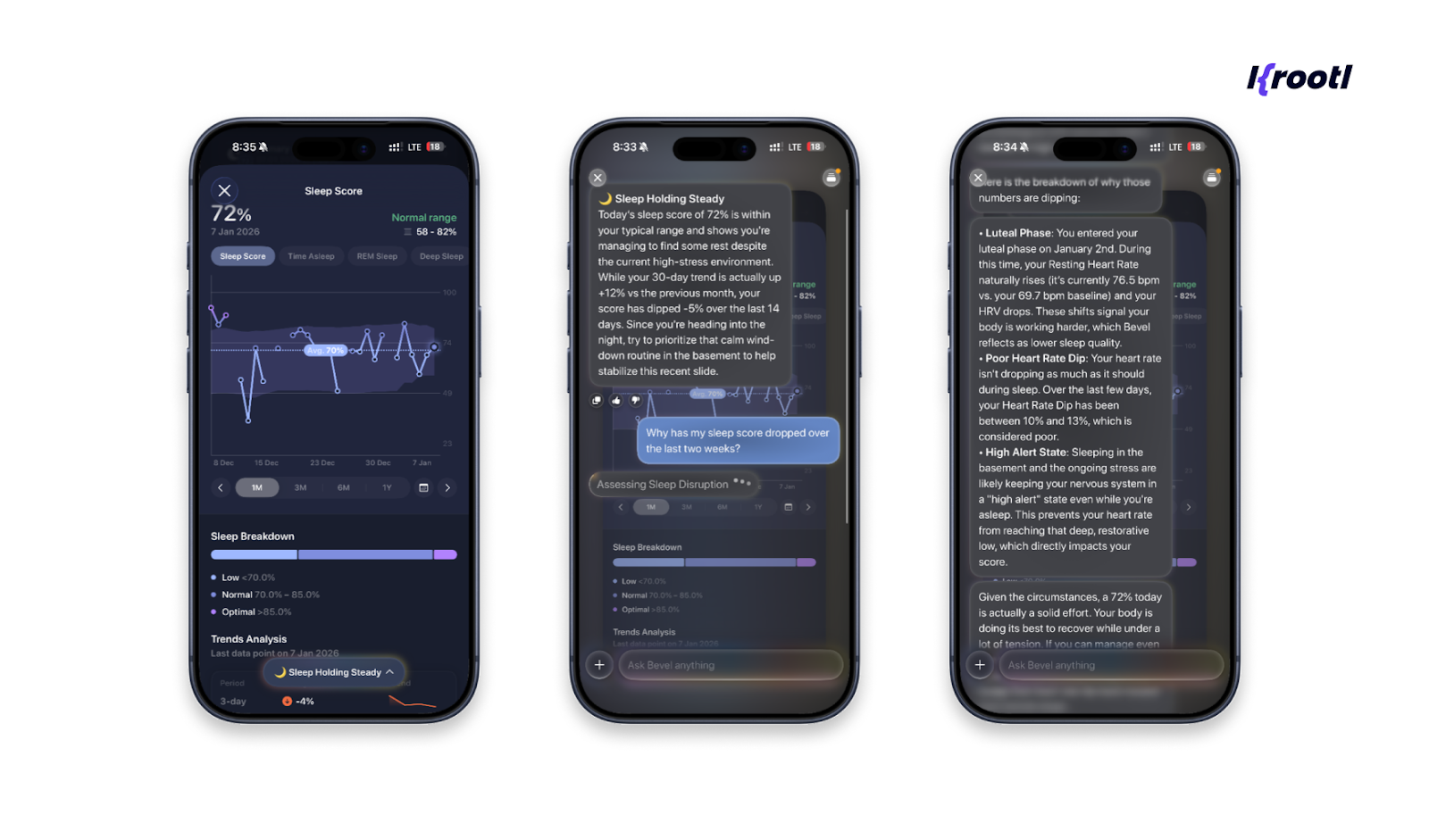
Because wearable data is often complex and imperfect, some fitness apps help users understand why their metrics look the way they do. Apps like Bevel use AI-driven explanations to translate sleep, recovery, or readiness scores into clear, human-readable insights. Rather than showing raw numbers, they explain patterns and contributing factors - helping users interpret their data with confidence instead of guesswork.
Flutter App Development for Wearables
From a technical perspective, wearable integration affects architecture decisions early. Background syncing, offline behavior, performance constraints, and platform-specific APIs all need to be considered.
This is why many teams choose to develop a fitness app with Flutter. Flutter allows teams to build a single cross-platform mobile application while still integrating with native health frameworks like Apple Health or Google Fit. With the right architecture, Flutter app development for wearables makes it possible to support multiple platforms efficiently without duplicating business logic.
Used correctly, Flutter helps teams move faster, reduce maintenance overhead, and keep wearable integrations consistent across iOS and Android - which is especially valuable as the wearable ecosystem continues to expand.
Turning Data Into Decisions
We’ve seen in practice that wearable integration works best when it supports decision-making, not data overload. In projects like Nestegg Health, the focus was not on showing every metric available, but on helping users understand patterns and make better daily choices.
Not every product needs deep wearable integration from day one. For some apps, basic activity syncing is enough. For others - especially wellness, recovery, or habit-driven products - wearables become a core part of the experience and should be planned early.
In the next section, we’ll look at how fitness apps are built from concept to launch, and how decisions around features, integrations, and technology come together in a real development process.
Fitness App Development Process: An 8-Step Checklist
By this point, you’re familiar with the main types of fitness apps, user motivations, and the role of wearables and habits. The next step is understanding how fitness app development typically works in practice - from early idea validation to long-term product growth.
When teams decide to develop a fitness application, success often depends on having a clear, structured process in place. Below is a practical, step-by-step checklist that helps align product decisions, technical execution, and business goals from day one.
1. Idea Validation
Every successful fitness product starts with a clear problem to solve. At this stage, teams define the niche and validate whether the idea fits real user needs.
This usually includes:
- identifying the target audience and their motivation
- validating how often the problem occurs in daily life
- understanding whether habit tracking, workouts, wellness, or recovery is the core focus
- deciding early if the app needs to develop an app with wearable device support or can work without it
Strong validation reduces the risk of building unnecessary features later.
2. Business Model and Strategy
Once the idea is validated, teams define how the app will work as a business.
Key decisions include:
- choosing a monetization model (subscription, freemium, premium access, coaching)
- defining the value proposition
- aligning pricing with engagement frequency
- understanding what users are willing to pay for over time
These choices directly influence scope, complexity, and long-term sustainability in fitness app development.
3. Feature Planning
With a strategy in place, teams move on to planning features for the first release.
This stage focuses on:
- listing core features for the MVP
- prioritizing based on impact and development effort
- separating essential functionality from future enhancements
- aligning features with user behavior and monetization logic
Clear feature planning helps control timelines and development costs.
4. App Design and Development
Design and development typically run in parallel. UX design focuses on clarity, low friction, and short interaction cycles - especially important for fitness apps used daily.
From a technical perspective, teams:
- build the mobile app and backend infrastructure
- integrate health platforms and wearable data if required
- implement tracking, analytics, and personalization logic
Many teams choose to develop a fitness app with Flutter to support both iOS and Android using a shared codebase. This approach can reduce development time and maintenance costs while still allowing native integrations with health APIs when needed.


5. Testing
Fitness apps interact with real-world behavior, background processes, and external devices, making testing especially important.
Testing usually covers:
- functional correctness
- performance and battery usage
- wearable and health data consistency
- edge cases such as interrupted sync or missing data
- security and permission handling
This step ensures the app performs reliably in everyday conditions.
6. Deployment
Once testing is complete, the app is prepared for release.
This includes:
- publishing to the App Store and Google Play
- ensuring compliance with store guidelines
- configuring analytics and monitoring tools
- preparing onboarding and first-time user flows
A smooth deployment helps build trust from the first interaction.
7. Marketing and Launch
Launching a fitness app is both a technical and strategic milestone.
Teams often focus on:
- defining a clear launch message
- targeting early adopters
- using content, partnerships, or influencers
- collecting early feedback quickly
Early traction provides insights that guide further development.
8. Continuous Improvement
Fitness app development doesn’t stop at launch. Successful products evolve based on real usage and feedback.
Post-launch work typically includes:
- analyzing engagement and retention metrics
- refining onboarding and habit flows
- improving wearable integrations
- adding features based on validated demand
- maintaining performance and stability
When development teams plan for iteration from the start, they’re better positioned to scale their fitness application sustainably.
How Much Does It Cost to Build a Fitness App
Cost is one of the first questions founders ask when planning fitness app development - and one of the hardest to answer with a single number. There’s no fixed price for a fitness app, because the final budget depends less on the idea itself and more on scope, platforms, integrations, and long-term product goals.
A more useful approach is to understand what drives cost and how different product decisions affect the overall investment.
What Influences the Cost of a Fitness App
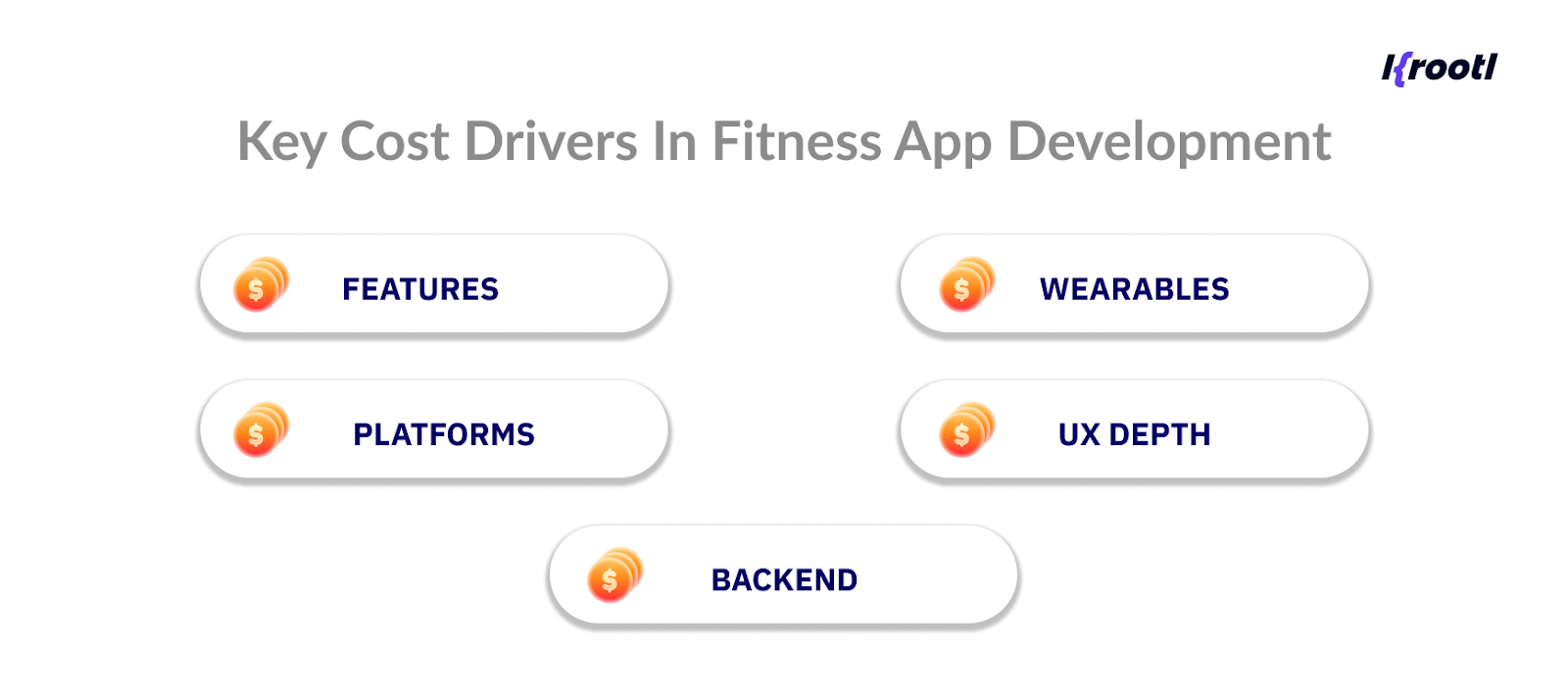
Several factors consistently have the biggest impact on how much it costs to develop a fitness application.
Feature scope is usually the main driver. A focused MVP with a small set of core features costs significantly less than a product with personalization, analytics, and long-term habit logic.
Platforms matter as well. Supporting both iOS and Android increases cost unless a cross-platform approach is used.
Wearable and health data integration adds another layer. Basic syncing through health platforms is relatively straightforward, while recovery metrics, sleep analysis, and background data processing require more development and testing effort.
Backend complexity also plays a major role. Secure data storage, personalization logic, analytics, and scalability all require reliable server-side infrastructure that grows with the product.
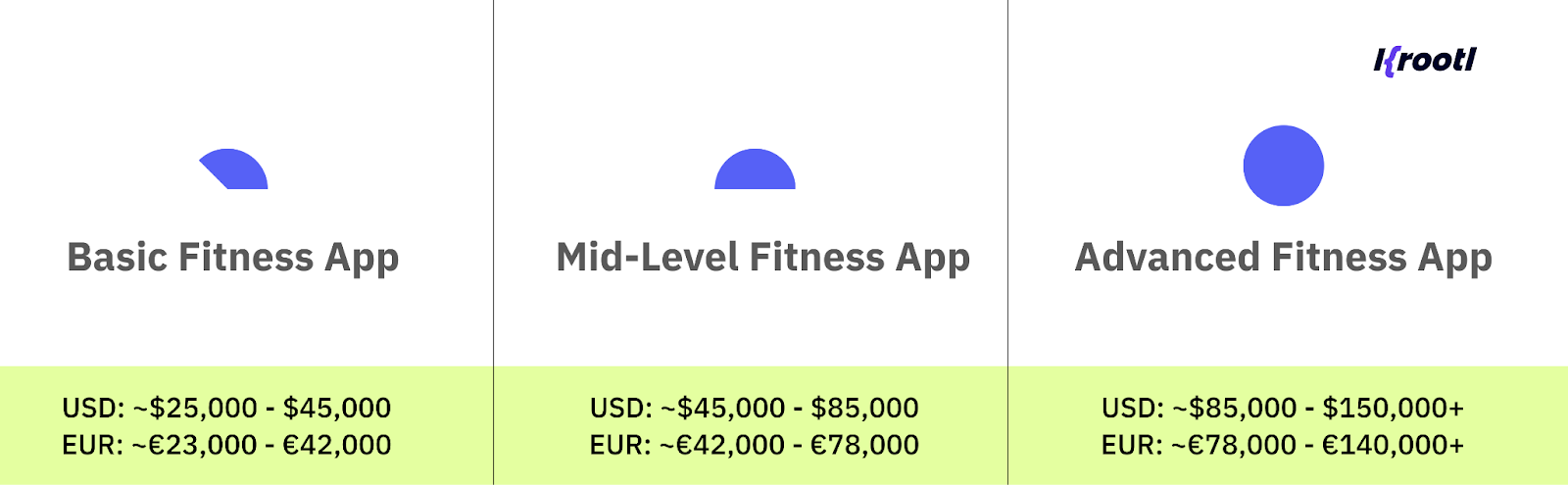
Typical Cost Ranges by App Complexity
Rather than fixed prices, fitness apps are best grouped by three levels of complexity. Based on industry benchmarks and projects similar in scope to those Krootl typically delivers, costs usually fall into the following ranges.
Wearables and Budget Considerations
Wearable integration often increases cost - but not always in the same way.
Basic activity syncing via Apple Health or Google Fit usually adds moderate effort. More advanced scenarios, such as recovery scoring, sleep analysis, or long-term trend processing, require additional architecture, testing, and monitoring.
The key is alignment: wearable features should exist only when they support real user decisions, not simply because the data is available.
Cost Is a Strategic Outcome
Ultimately, the cost of a fitness app is the result of product decisions. Apps built with a clear MVP scope, realistic feature priorities, and scalable architecture tend to be more cost-efficient over time than products that try to do everything at once.
When fitness app development is approached strategically - choosing the right complexity level, platforms, and integrations - teams gain more control over both budget and long-term growth.
All figures above represent high-level estimates, not fixed prices. Actual cost depends on feature scope, integrations, design depth, timelines, and ongoing support needs. Accurate budgeting always requires a detailed product discussion.
Maintaining and Scaling Your Fitness App
Launching a fitness app is just the first step. Long-term success depends on how well the product is maintained, supported, and adapted as usage grows. In practice, maintaining a fitness app often requires as much attention as building the first version.
To properly support a fitness app, teams need to plan for ongoing work after launch. This includes bug fixes, performance monitoring, OS and app store updates, and ensuring wearable and health data integrations continue to work reliably. For fitness apps, stability is critical - issues with tracking, syncing, or background activity can quickly affect user trust.
As the product grows, teams often look to extend a fitness app with new features, integrations, or content. The key is scaling gradually: adding personalization, analytics, or advanced wearable support only when it clearly benefits users. Scaling too fast can increase complexity without improving engagement.
Technology choice plays an important role here. Teams that support a fitness app with Flutter benefit from a shared codebase across iOS and Android, making updates, fixes, and feature rollouts more efficient as the app evolves.
In some cases, growth also means rethinking the technical foundation. Teams may choose to migrate a fitness app to Flutter when maintaining separate native codebases becomes costly or slows development. A phased migration helps modernize the product while minimizing risk for existing users.
Teams that develop a fitness application with long-term growth in mind typically:
- revisit product assumptions regularly
- invest in analytics and user feedback
- refine features based on real behavior
- prioritize reliability as much as innovation
This mindset helps fitness apps scale sustainably while staying relevant and trusted over time.
Wrapping up
Fitness apps have evolved far beyond simple workout trackers. Today, successful products sit at the intersection of habits, health data, wearables, and long-term engagement. As we’ve explored throughout this guide, fitness app development is less about packing in features and more about making thoughtful decisions - about users, scope, technology, and growth.
From choosing the right app type and monetization model to integrating wearables, planning development, estimating cost, and scaling over time, each step builds on the previous one.
If you’re planning to develop a fitness application - whether it’s an MVP, a wearable-driven wellness product, or an existing app that needs to scale - having the right partner and process makes a measurable difference.
Let’s Talk About Your Fitness App
At Krootl, we help teams design, build, and support fitness apps across web and mobile - from early discovery to long-term scaling. If you’re exploring fitness app development, want to extend an existing product, or are considering Flutter for cross-platform delivery, we’re happy to discuss your idea and share practical guidance.
Get in touch with our development team to talk through your fitness app concept, scope, or next steps.